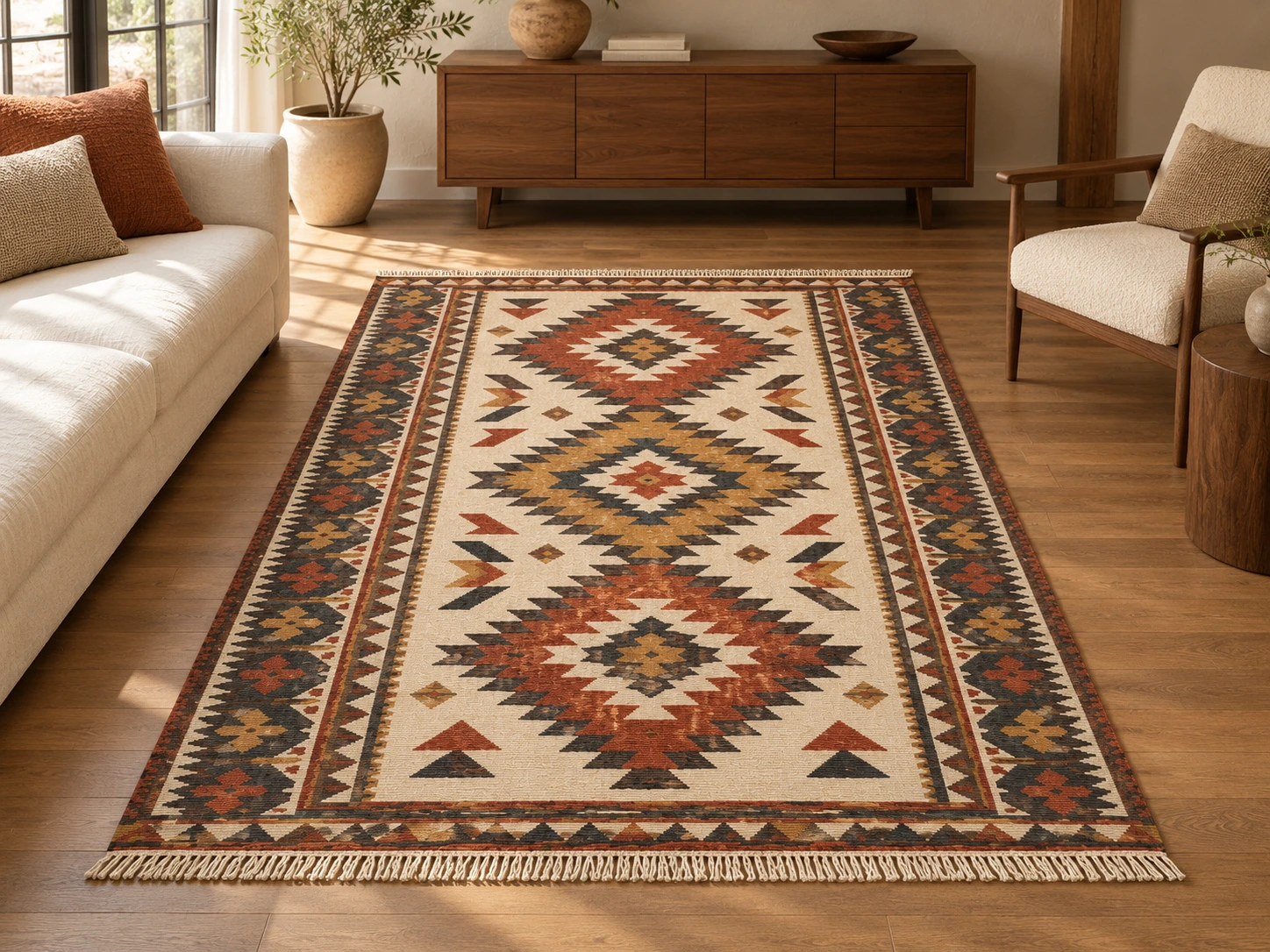
A flatweave rug has no pile — the pattern is created entirely by interlacing the warp (vertical) and weft (horizontal) threads, the same basic technique as plain cloth weaving, just at rug scale and usually on a floor loom. Dhurries and kilims are both flatweave constructions; the difference between them is largely regional origin and pattern tradition rather than technique.
How to identify one
A flatweave rug is thin, lies close to the floor, and is usually reversible — the pattern looks essentially the same on both sides, since there is no pile to hide the back.
Why it matters to a buyer
Flatweave rugs are lightweight, easy to ship, fold without creasing badly, and sit at a lower price point than knotted or tufted pile rugs. They suit casual and transitional interiors, layering under other rugs, and higher-volume programs where cost per unit matters.