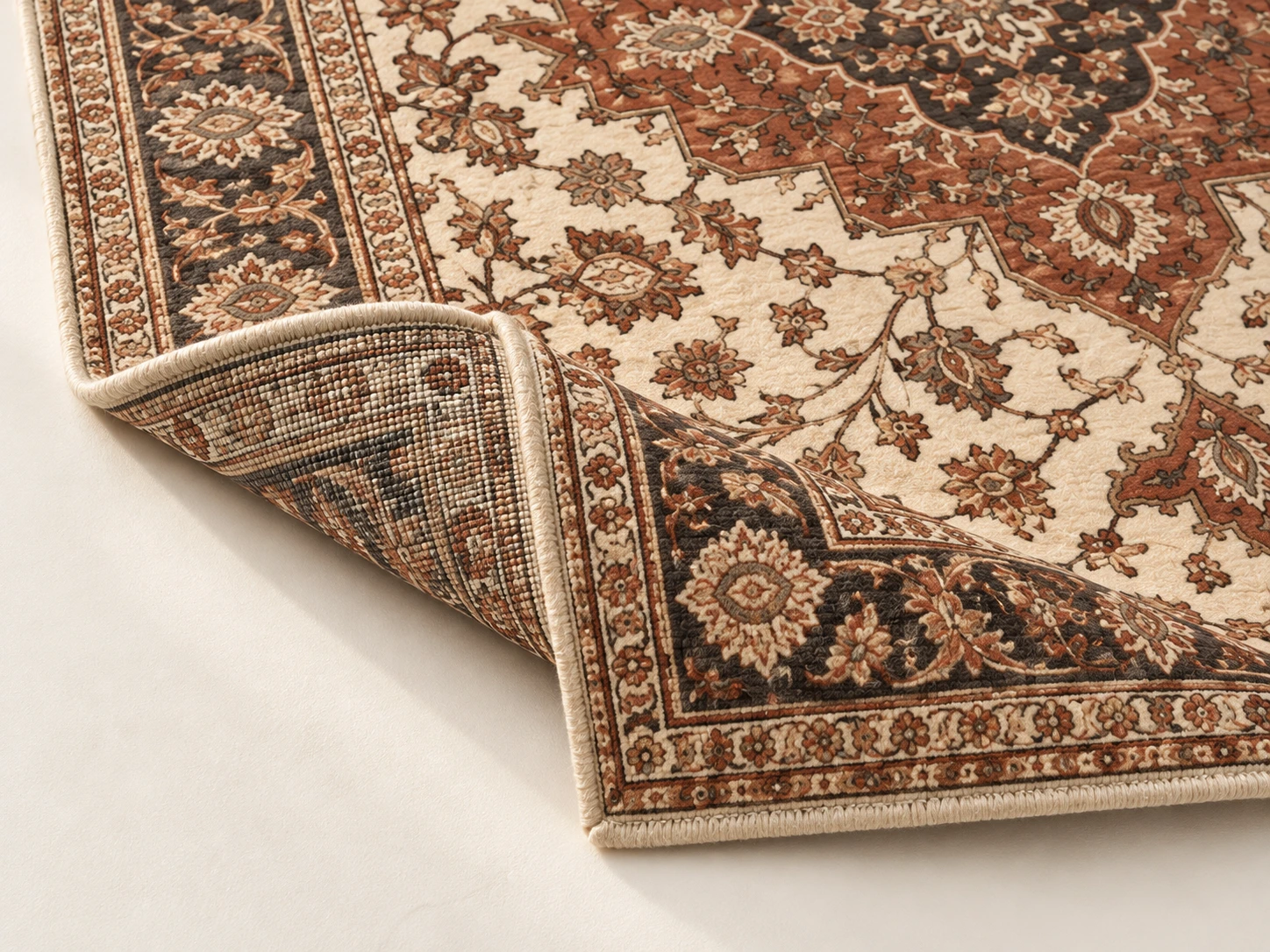
A handwoven flatweave carpet has no pile. The pattern is woven straight into the fabric of the rug, so it is thin, light, and the same on both sides. India has woven flatweave rugs for centuries, and today it is one of the largest sources of handwoven flatweave rugs for export. If you are building a flatweave range, this is what to know.
What "Handwoven Flatweave" Means
In a flatweave, coloured weft threads pass over and under the warp threads on a loom, building the design as the fabric is made. There are no knots and no cut yarn. That is the main difference from a hand-knotted rug, where individual knots create a raised pile. See our entry on flatweave for the short definition.
"Flatwoven rug" and "flatweave rug" mean the same thing. Buyers use both spellings, so it is worth using both in product listings.
The Main Types of Indian Flatweave
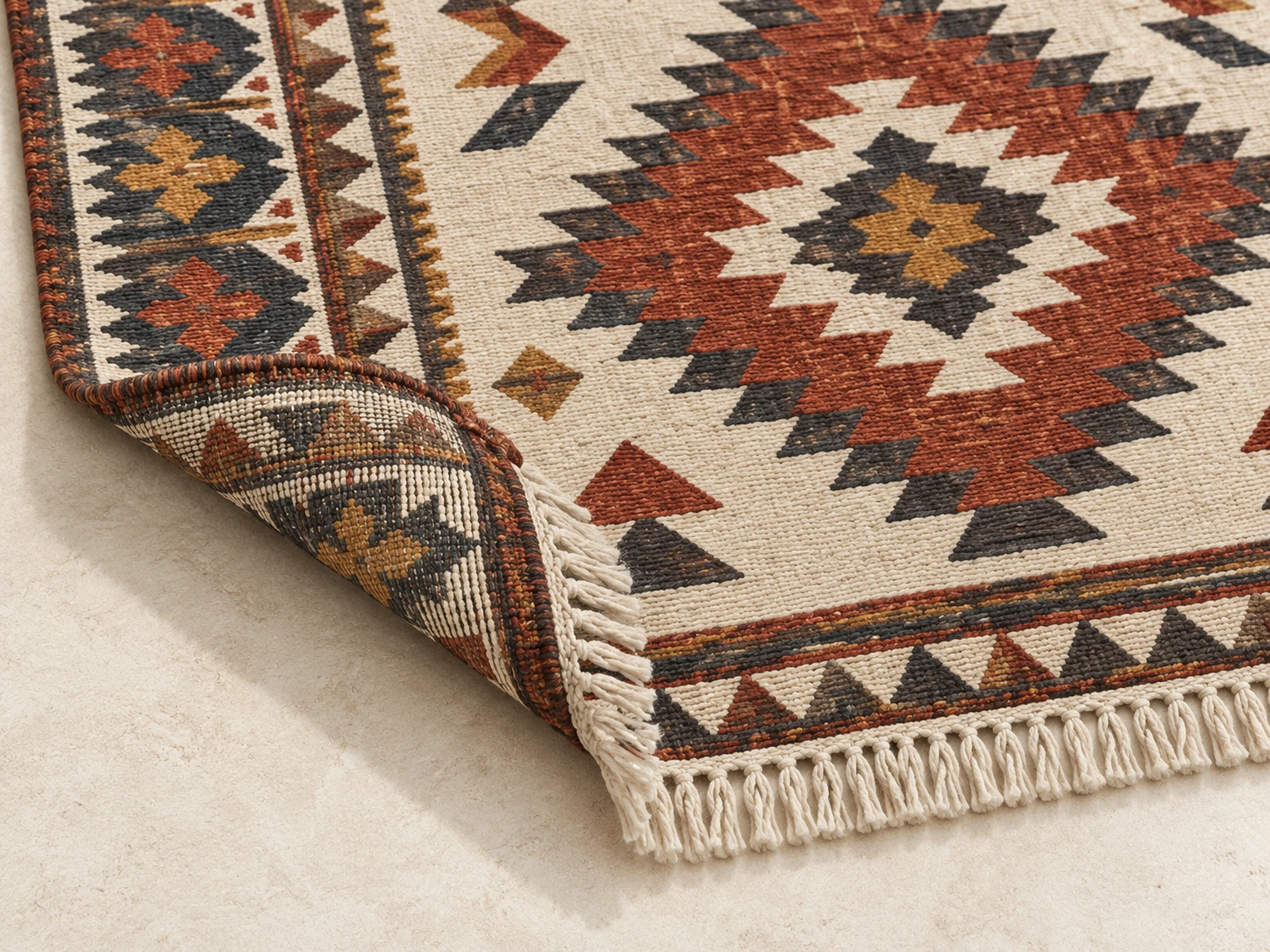
- Dhurrie: traditionally cotton, woven on a handloom, often in stripes or geometric repeats. Read what a dhurrie is and how it differs from a kilim.
- Wool flatweave: a heavier, denser flat fabric that suits living rooms and hallways better than thin cotton.
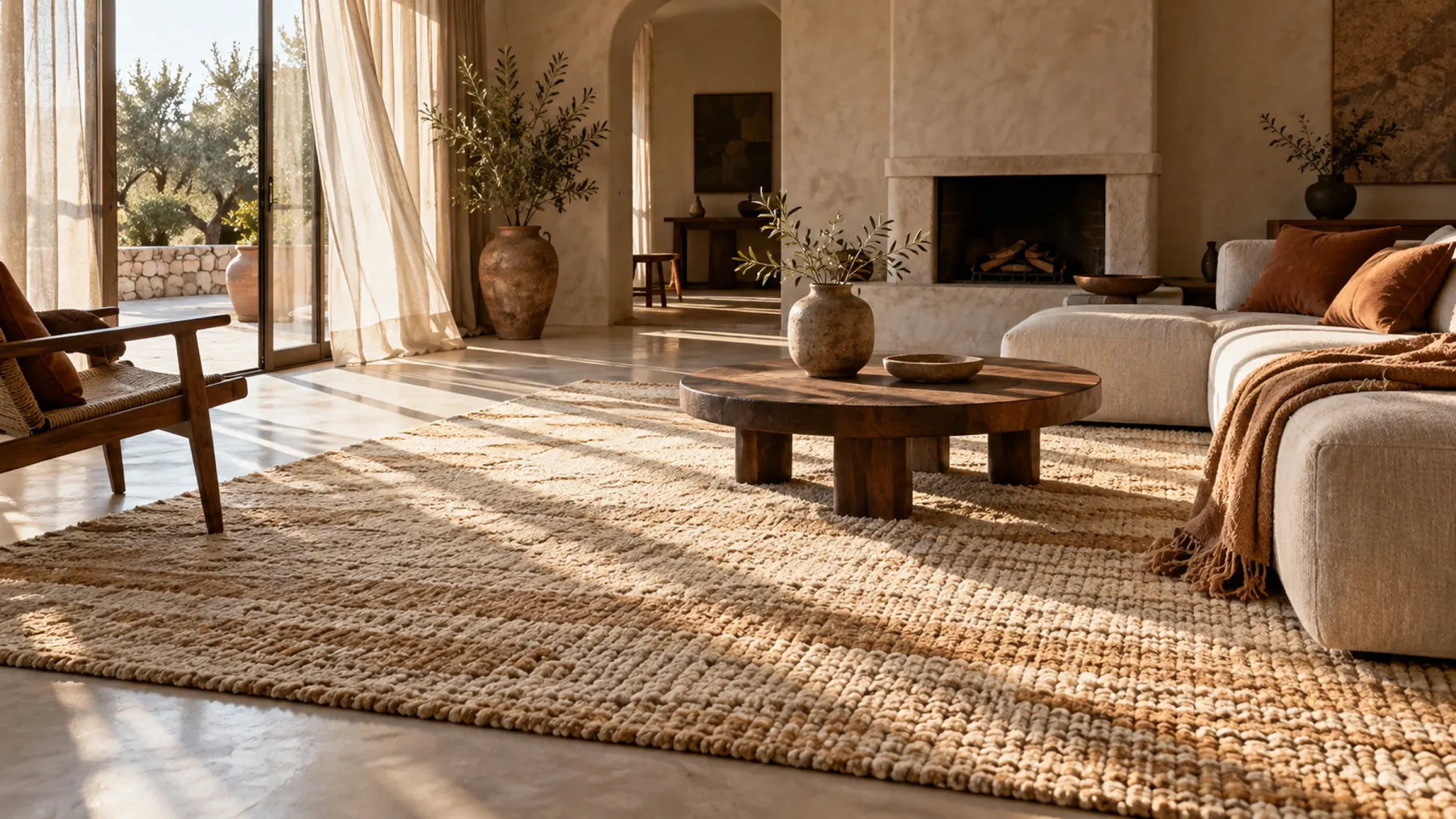
- Jute and natural-fibre flatweave: coarse, textured and neutral. See our jute and natural fibre rugs.
- Kilim-style flatweave: tapestry weave with sharp-edged geometric motifs. Browse our kilim and flatweave rugs.
Where Flatweave Rugs Are Made in India
Panipat in Haryana is the best-known centre for dhurries and cotton flatweaves. Jaipur and other parts of Rajasthan are known for handloom work and strong design development. The Bhadohi and Mirzapur belt in Uttar Pradesh is better known for knotted rugs, but also weaves flatweaves and has deep export infrastructure.
Why Retailers Stock Flatweaves
- Lower price points than pile rugs, with a real handmade story.
- Light to ship, which keeps freight cost per piece down.
- Reversible, so they hold up well in busy homes and in layered styling.
- Easy to customise in colour and stripe width without new tooling.
What to Check Before You Order
- Fibre: cotton, wool, jute or a blend. Each wears and cleans differently.
- Weave density: a tighter weave lies flatter and lasts longer. Ask for a sample and judge it by hand.
- Edge finish: check that the edges are secure and do not curl.
- Colourfastness: request a wet-rub test on darker or saturated colours.
- Size tolerance: handwoven rugs vary slightly, so agree a tolerance up front.
Flatweaves need a non-slip underlay because they have no pile to grip the floor. It is worth telling your customers.
Sourcing a Flatweave Line
We weave flatweave rugs to your size, colourway and pattern. Send a reference image and a quantity through our trade enquiry page and we will come back with sample pricing and a timeline.