Silk is the finest rug fibre. A silk rug is easy to spot: it glows. This guide covers its main characteristics so you can judge one properly. For the short definition, see silk in our glossary.
Key Characteristics of a Silk Rug
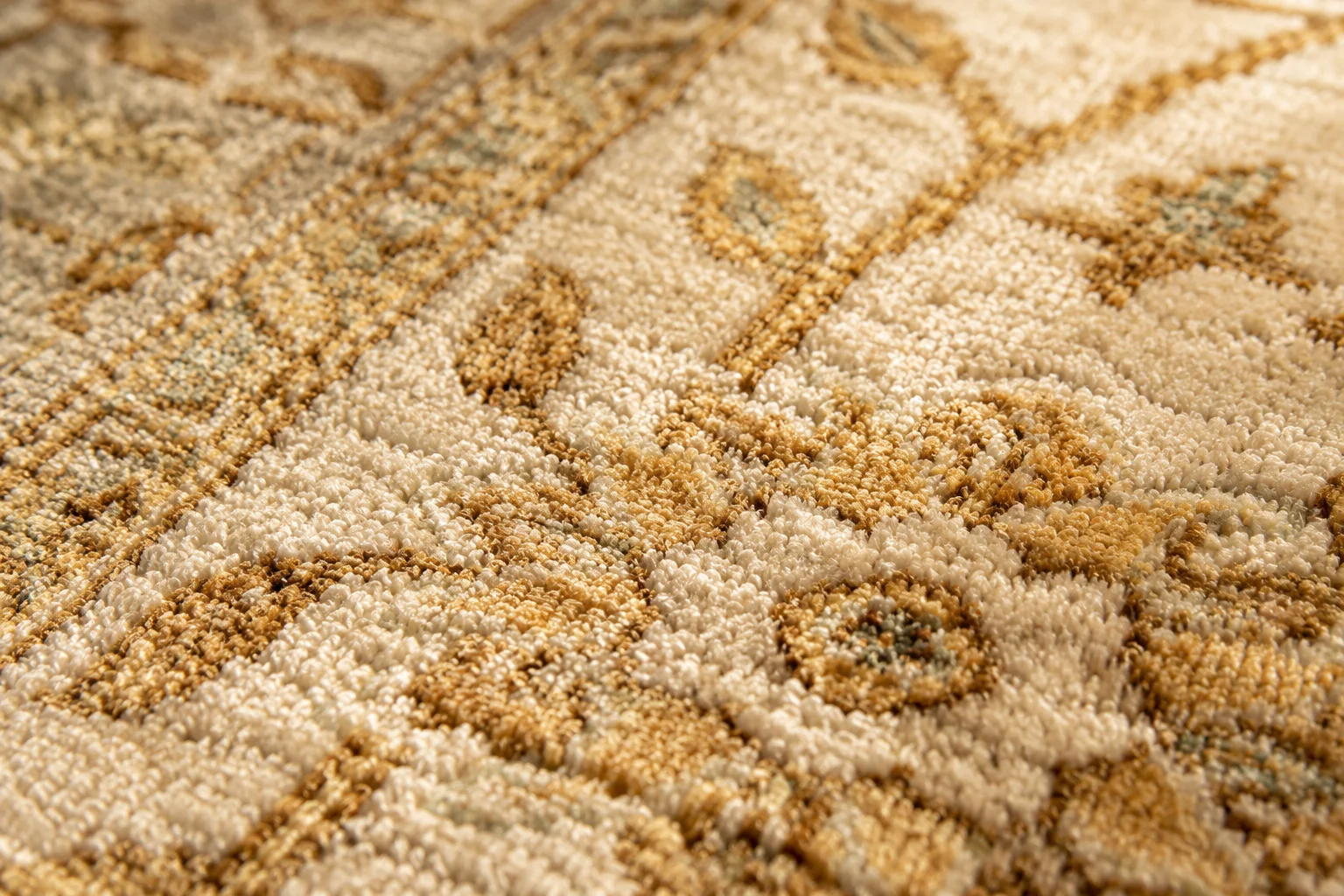
- Lustre: silk reflects light and changes shade as you walk around the rug. This "colour shift" is the surest sign of real silk.
- Fineness: silk yarn is very thin and strong, so knot density can be very high, and designs can be extremely detailed. See knot density.
- Colour depth: silk takes dye brilliantly, so colours look clear and saturated.
- Soft, smooth hand: the pile feels cool and silky.
- Tensile strength: silk is strong for its weight, but it is not elastic like wool.
Pros and Cons
- Pros: unmatched detail and sheen, a refined look, and a good fit for wall hangings, bedrooms and low-traffic rooms.
- Cons: higher cost, less resilient than wool, shows crushing and wear in busy areas, and is more sensitive to water and sunlight.
Silk, Wool-and-Silk, and Viscose
Pure silk rugs are expensive. Many rugs use silk as highlights in a wool pile, which adds sheen at a lower cost and with better durability. Viscose, sometimes called art silk, imitates the sheen at a fraction of the price, but it is weaker, especially when wet. Ask exactly what a rug contains.
How to Tell Real Silk
Rub the pile with your hand: real silk feels cool and slides. A burn test on a loose fibre distinguishes them. Real silk smells like burnt hair and leaves a crumbly ash, whereas viscose burns like paper. Always take a fibre from an edge or from a spare piece.
Care
- Vacuum gently with suction only, never with a beater bar.
- Keep it out of direct sun, which fades silk.
- Blot spills straight away. Never rub or soak.
- Use a professional cleaner who is experienced with silk.
See also how to clean a handmade rug.