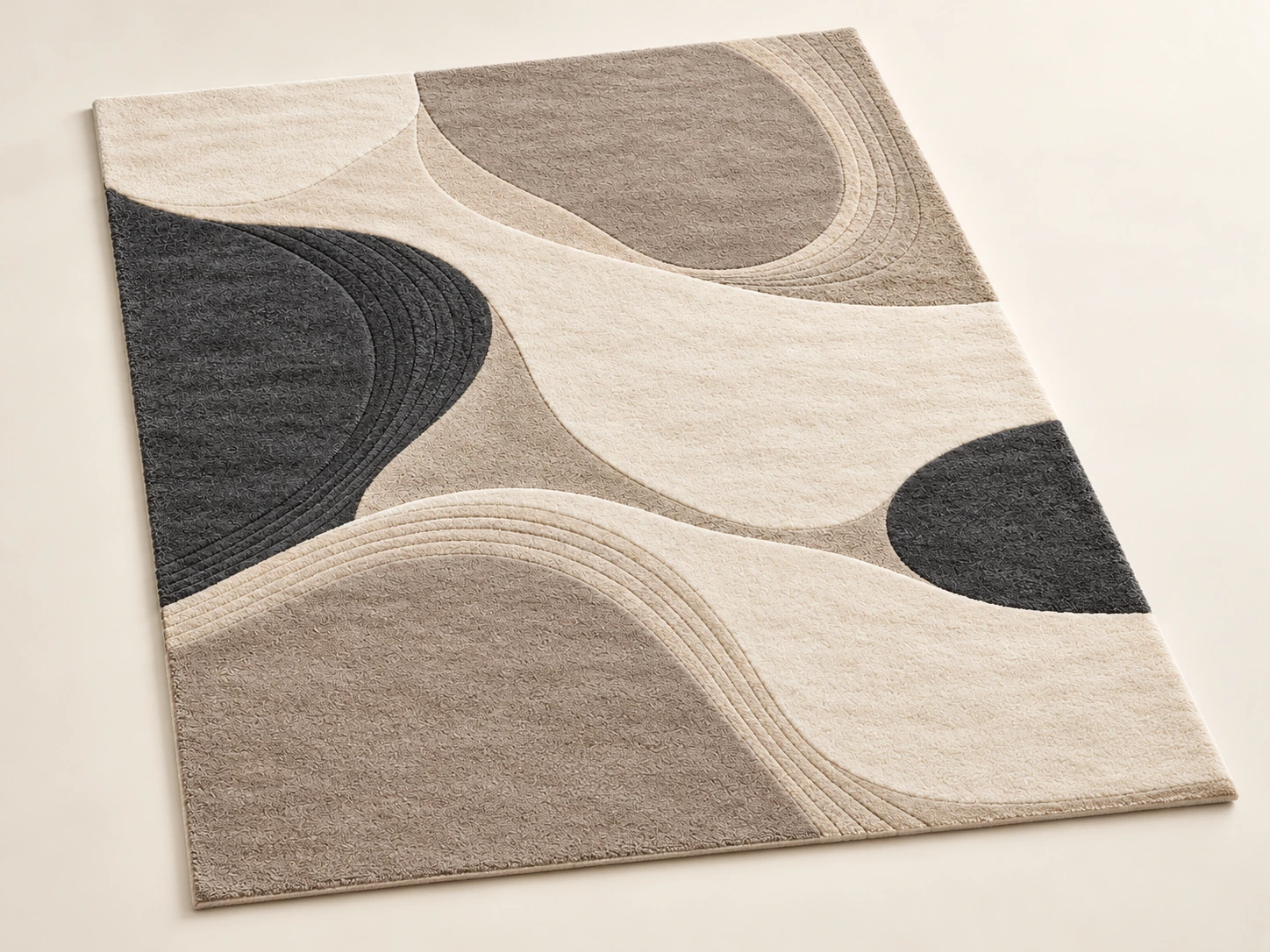
An abstract rug has no recognisable motif. Instead it uses shape, colour and texture to create a mood. In wool, abstract design looks its best, because the fibre takes dye richly and gives a soft, even surface for colour to sit on.
Why Wool for Abstract Designs
- Dye depth: wool absorbs colour well, so the blends and gradients in abstract art look rich and not flat. Read about wool as a rug fibre.
- Resilience: wool fibres spring back, so the pile keeps its look under furniture and foot traffic.
- Natural stain resistance: wool repels most spills for a short time, which gives you time to blot them.
- Texture: cut pile, loop pile and carved edges can all be combined to add dimension within one design.
Hand-Tufted or Hand-Knotted?
Most abstract wool rugs are hand-tufted. A tufting gun follows large, sweeping shapes easily and the cost stays reasonable. Hand-knotted abstract rugs exist and last far longer, but they cost more and the finest detail is limited by knot density. Our comparison of hand-knotted and hand-tufted rugs explains the trade-off.
Choosing Colour
For a calm room, pick abstract rugs in tonal colours: ivory, grey, sand and soft blue. For a statement piece, choose a high contrast, such as indigo with terracotta. Check that at least one colour in the rug appears elsewhere in the room, such as the cushions or curtains. That single link ties everything together.
Sizing and Placement
Abstract rugs read best when large enough to see the whole composition. An 8 x 10 or larger is ideal for a living room. Place it so the main seating sits on the rug. For exact dimensions see common rug sizes.
Care
Vacuum without a beater bar and blot spills. See our care guide for the details.
Sourcing
See our abstract hand-tufted rugs and the catalog for wool designs, or send us your own artwork for a custom or private label abstract rug.