"Handmade" covers four quite different constructions. Knowing the differences helps you buy, and sell, the right rug for the right use.
Hand-Knotted
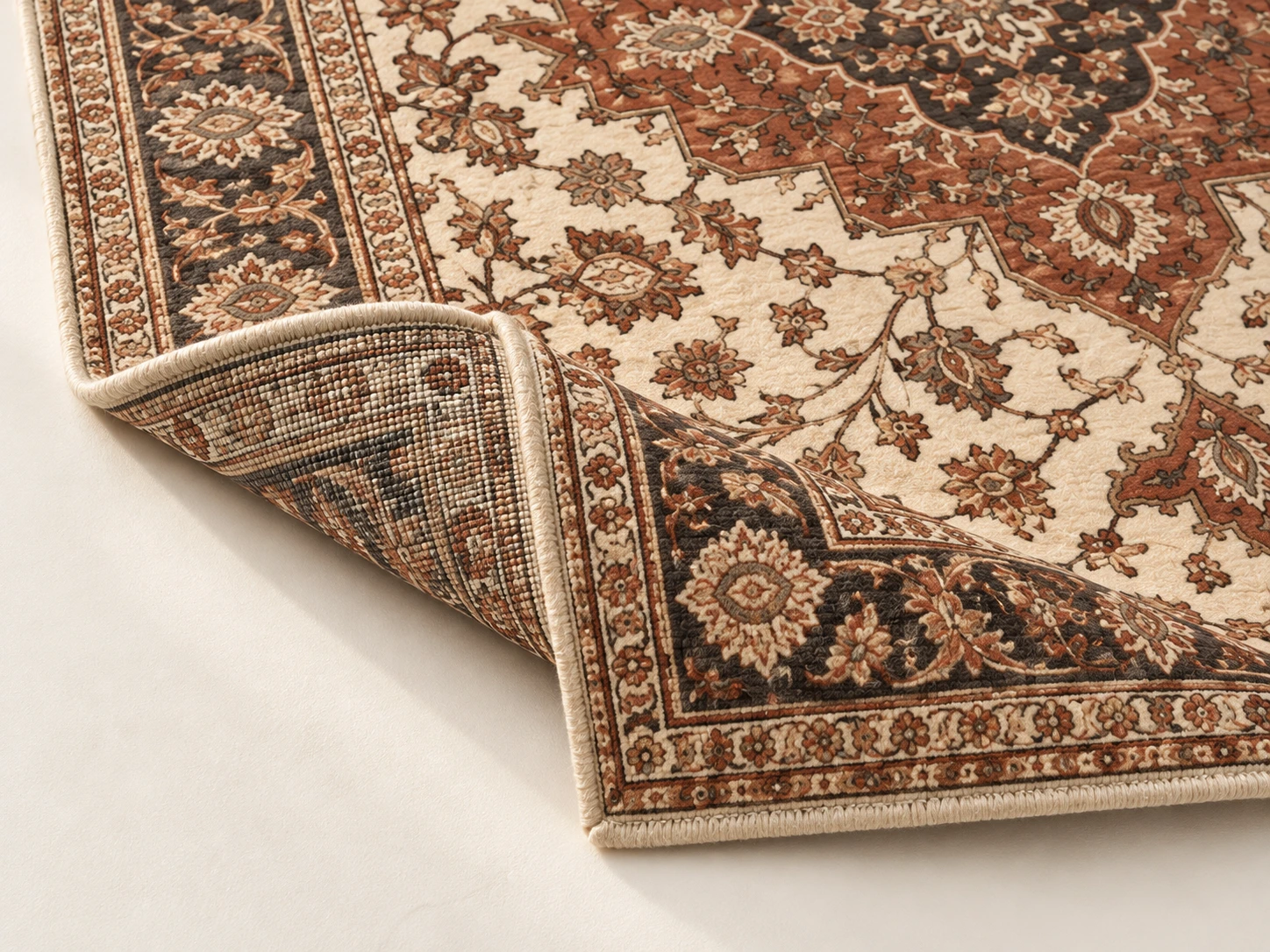
Each knot is tied by hand around the warp on a loom. It is the slowest method and the most durable, with no backing. Quality is measured by knot density. Read more about hand-knotted rugs and browse our hand-knotted wool rugs.
Hand-Tufted
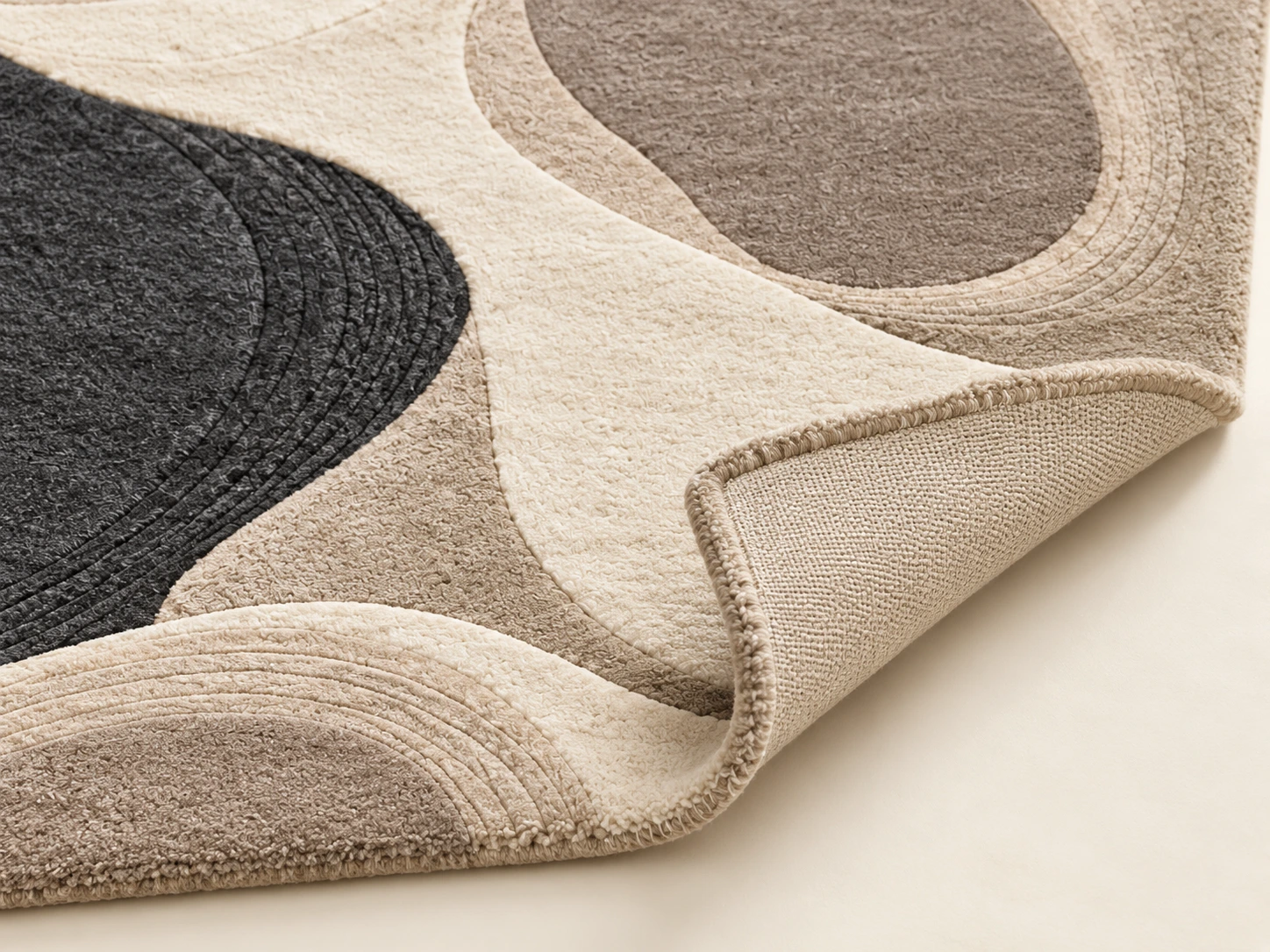
Hand tufting uses a hand-held tufting gun to punch yarn through a fabric backing, following a pattern drawn on the cloth. The loops are cut or left to make pile, then a second backing holds it in place. It is faster and cheaper than knotting. See hand-tufted, our hand-tufted rugs, and the full comparison in hand-knotted vs. hand-tufted.
Hand-Loomed
A hand-loomed rug is woven on a handloom, with the weaver working the loom by hand. The pile is made by weaving loops, usually left uncut or lightly sheared, so the result tends to be dense, flat and uniform. It sits between flatweave and knotting in cost. See hand-loomed.
Flatweave
No pile at all: the design is woven into the fabric itself. Dhurries and kilims are the best-known examples. See handwoven flatweave rugs from India and the glossary entries for flatweave, dhurrie and kilim.
Comparison
- Durability: hand-knotted is highest, then flatweave and hand-loomed, then hand-tufted.
- Price: hand-knotted is highest. Hand-tufted is usually the most affordable pile rug. Flatweaves vary with fibre.
- Lead time: hand-tufted is shortest. Hand-knotted is longest.
- Design freedom: hand-tufted handles bold, large shapes best. Hand-knotted handles the finest detail.
Picking a Construction
Choose by the job the rug has to do. For a long-term investment, knotted. For a trend-driven collection, tufted. For a casual, light, reversible rug, flatweave. If you are unsure, talk to us and we can advise on the best construction for your price point and market.